

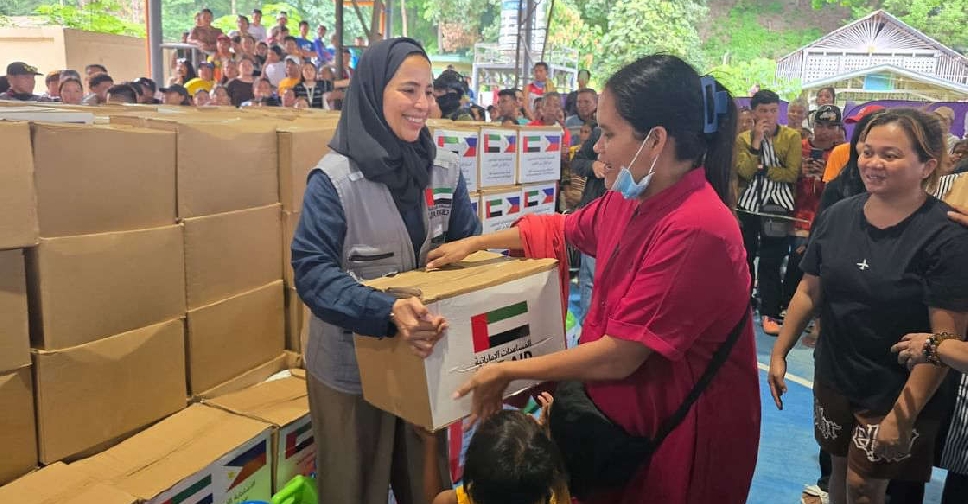
The UAE marks World Humanitarian Day on August 19, reaffirming its longstanding commitment to helping people in need and supporting communities around the world.
The country’s humanitarian approach is rooted in the legacy of the late Sheikh Zayed bin Sultan Al Nahyan, and continues under President His Highness Sheikh Mohamed bin Zayed Al Nahyan, with the UAE playing a leading role in global humanitarian response.
In 2026, the UAE has continued to expand its humanitarian efforts across hunger relief, healthcare, education and emergency response.
One of the year’s major initiatives was the 'Edge of Life' campaign, launched by His Highness Sheikh Mohammed bin Rashid Al Maktoum, Vice President and Prime Minister of the UAE and Ruler of Dubai, to help save five million children from hunger worldwide.
The campaign raised more than AED 2.8 billion, with contributions from more than 44,000 individuals, companies and humanitarian organisations.
The UAE has also launched initiatives to support the global fight against river blindness, while education projects have included the opening of a vocational institute in Senegal designed to provide around 1,000 young people with technical and professional skills.
UAE humanitarian organisations have continued to deliver aid and development projects across dozens of countries.
The Emirates Red Crescent’s Ramadan programmes alone reached more than 1.5 million people in the UAE and 44 countries.
The International Charity Organisation delivered projects worth more than AED 353 million during the first half of this year, covering healthcare, education, food, water and emergency relief.
The Zayed for Good Foundation, which marked its 34th anniversary this month, has also made a significant global impact.
Since its establishment in 1992, its programmes have reached more than 180 countries, with humanitarian assistance worth more than AED 2 billion.
The UAE has also responded to major natural disasters this year, providing food, water, shelter and other essential supplies to communities affected by earthquakes and floods in countries including the Philippines, Venezuela, Colombia, Syria, Ghana, Bangladesh and Malaysia.
In Gaza, the UAE continues to provide large-scale humanitarian assistance through Operation Chivalrous Knight 3, which reached 1,000 days of continuous operations this August.
The UAE has provided more than $3.89 billion dollars in assistance, delivering over 126,000 tonnes of relief, medical and food aid.
UAE medical facilities in Al Arish, including the field hospital and floating hospital, have treated more than 230,000 cases.
The UAE has also launched the Step of Hope programme, providing prosthetic care and rehabilitation for Palestinians who have lost limbs.
In Sudan, the UAE has provided around $4.24 billion in assistance over the past decade, including more than $800 million since the crisis began in 2023.
The UAE has also provided funding for refugees and host communities, food security and humanitarian response programmes.
Beyond emergency aid, the UAE has supported humanitarian stability in Ukraine through mediation between Russia and Ukraine.
Twenty-five mediation efforts have helped facilitate prisoner exchanges involving a total of 7,791 people.
These efforts reflect the UAE’s broader humanitarian approach — combining emergency relief with healthcare, education, development and diplomatic initiatives aimed at supporting communities and improving lives around the world.

 UAE air defences detect two ballistic missiles
 UAE says situation is safe after missile threat
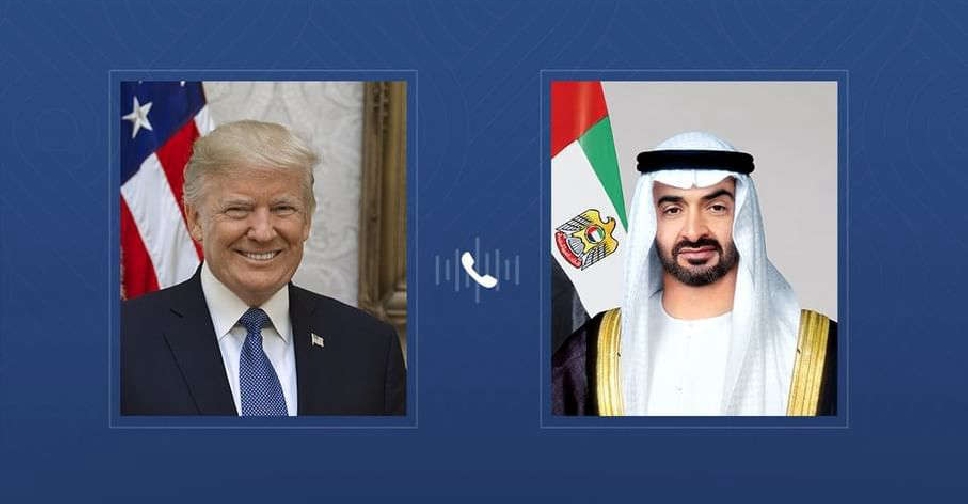 UAE, US Presidents discuss regional developments
 UAE updates scholarship rules for Emirati students
 UAE condemns Iranian attacks on Iraq's Kurdistan